
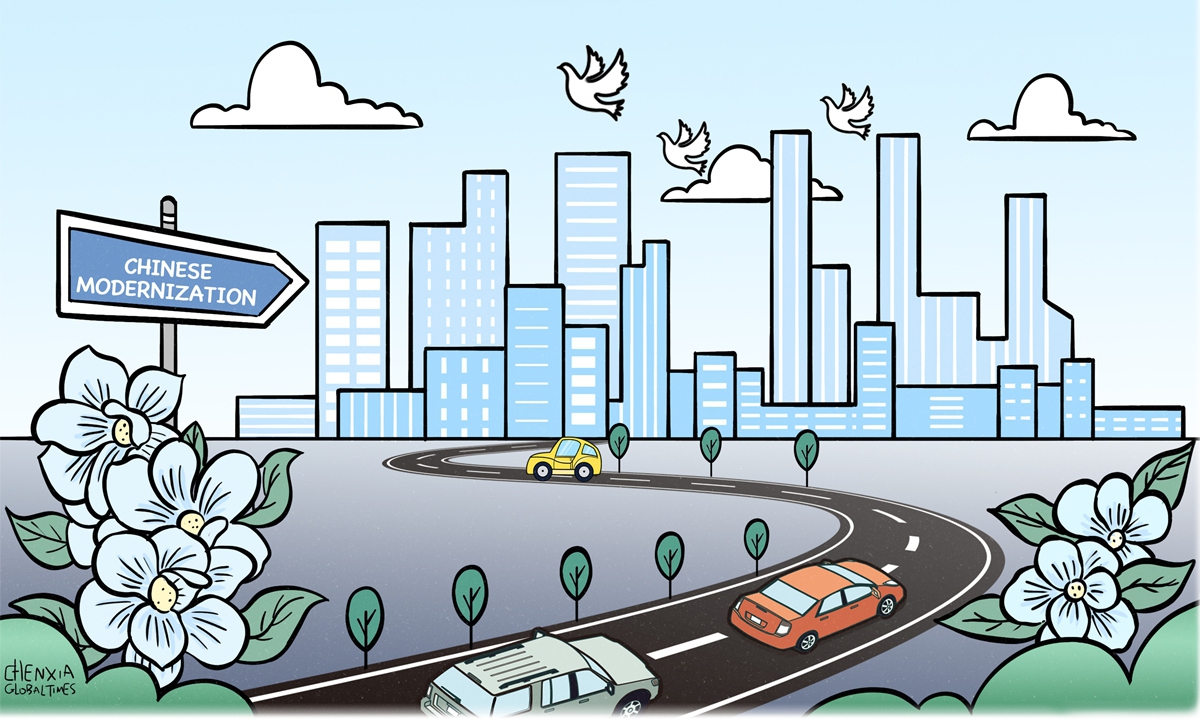
“From this perspective, I support the hypothesis that China is promoting a gradual shift from the “socialist system with Chinese characteristics” to “Chinese governance with socialist characteristics.” “Socialism” – insofar as the noun that can be referenced, in form and content, to the political theories and processes of the 20th century – becomes a qualifying adjective for what is intended to be China’s own and original governance model for the 21st century.”
Artigo publicado originalmente no Global Times no dia 11 de novembro de 2024.
China is an example of a developing country that has made remarkable achievements. Numerous studies have sought to understand and explain the reasons for China’s modernization based on economic data published by international organizations, governments and think tanks. However, these data are not sufficient to understand the country’s governance. China’s State Council once declared that China’s “historical heritage” and “cultural traditions” are the basis for the evolution of the Chinese political system. China’s system of governance promotes the reunion of what is considered the best of Chinese culture with the dream of revitalizing the nation set forth by the Communist Party of China. Without understanding this, it is impossible to understand China in the 21st century.
Governing China means governing 1.4 billion people. It is a world within a world, a Chinese world. There are aspects of China’s social and political dynamics whose explanation can be (and perhaps can only be) found within itself, in the original soil of its culture, and not outside it. This is an inescapable fact that explains many internal processes of social organization.
It is well known how Chinese wisdom, through the thinking of great Chinese philosophers and writers, influences China’s governance. The Chinese culture understands the role of the individual and society in the country’s development in a chain of relationships that expands in ever-widening circles, in the process of mutual influence, to promote social stability – or, if you prefer, peace.
In ancient times, people described the standard for governing the country as follows: “Cultivate oneself, put family in order, govern the state, and pacify the world.” Note that the individual is not thought of in isolation from the rest of society, nor is the stability of the world thought of without considering the relevance of the actions and responsibilities of each individual living in it. The development of a nation depends on each individual, and the development of each individual will depend on the collective well-being. In this chain of relationships that expands from the individual to wider circles, world peace will depend on well-governed nations, which in turn depend on orderly families, and these families depend on individuals who seek their self-cultivation. Leaders who lack such wisdom harm their country and can even lead the world into chaos.
Without knowledge of China’s culture, it is impossible to understand why its political system and society are the way they are; without studying the country’s political and legal processes and institutions, it is impossible to know how the Party and the State act to promote socioeconomic development and legitimize themselves before the Chinese people. Without interacting with Chinese people and living their daily lives, it is impossible to see the world from their perspective, which is essential to counterbalance our point of view, which is heavily influenced by an excessively Westernized conception of the world.
Chinese governance condenses an institutional, political, economic and social reality resulting from a historical process that borrowed elements from Soviet socialism in the past, from Western capitalism with the reform and opening-up policy and increasingly allowed the emergence of what is unique to Chinese culture in its institutions, practices and ideas.
From this perspective, I support the hypothesis that China is promoting a gradual shift from the “socialist system with Chinese characteristics” to “Chinese governance with socialist characteristics.” “Socialism” – insofar as the noun that can be referenced, in form and content, to the political theories and processes of the 20th century – becomes a qualifying adjective for what is intended to be China’s own and original governance model for the 21st century.
If time proves my thesis right, we will face a fact that could change the course of debates and reflections on China, on socialism and this country’s role in the international system from now on. Trying to understand China with a Cold War mentality says more about one’s ignorance than about China. It is time for us to study China more broadly, calmly and open-mindedly.
0 comentários